From chemistry labs in Toronto to operating theatres in Oxford, and lately to shipping software for the people I work alongside. This is how I got here, and why I build.
WHERE I AM NOW
A surgeon who ships software.
Somewhere between night shifts and clinics, I wrote my first line of code. Eight months later I shipped a full product. Then another. Then a pipeline, a labour-ward board, a literature digest that reads PubMed so I do not have to.
I build for the person standing in the corridor at 3am, because most weeks that is me.
Four years of biochemistry in Toronto, a Master’s, and a PhD acceptance in hand. Convinced this was the path.
2012-2016
University of Toronto
Biochemistry
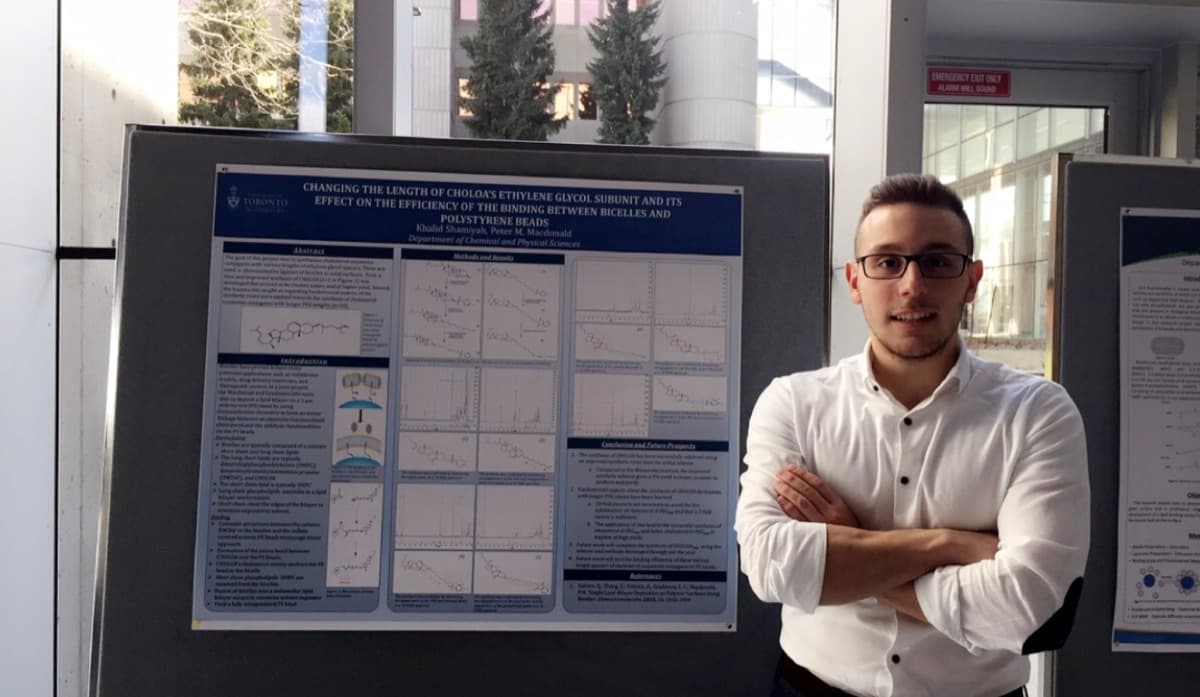
University of Toronto campus- Third-year research presentation: where the academic path started.
Chemistry and biology were my strengths in school. Biochemistry at the University of Toronto was the natural choice. Medicine never crossed my mind. My plan? Academia. Research. Simple.
Four years of lab work and scientific thinking confirmed it. Or so I thought. I was ready to go deeper, to pursue a Master's in Chemistry. The skills I was building would prove invaluable. Just not in the way I expected.
University of Toronto campus- Third-year research presentation: where the academic path started.
2016-2017
Master's in Chemistry
Research & Discovery
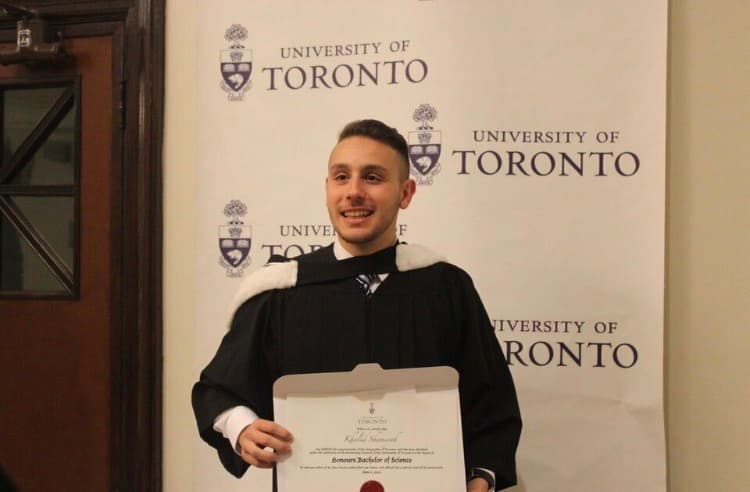
Graduation day, University of Toronto- BSc and MSc in Chemistry complete and PhD acceptance in hand – convinced this was my path.
A Master's in Chemistry meant going deeper: organic synthesis, analytical methods, exploring novel compounds with therapeutic potential. The work was demanding: designing experiments, troubleshooting failures, celebrating rare breakthroughs.
I found it incredibly rewarding. Meticulous. Intellectually satisfying. I was so convinced I applied for a PhD program. Academia was the plan.
Then the hospital presentations started. I'd show our molecular findings to clinical teams, doctors treating real patients. The contrast was immediate: they left our meetings to change lives. I went back to the lab.
Their work mattered daily. Directly. Undeniably. Mine? Might contribute to something useful years from now. Maybe. I realized I wanted what they had: tangible impact, human connection, work that mattered today. Wrong path entirely.
Graduation day, University of Toronto- BSc and MSc in Chemistry complete and PhD acceptance in hand – convinced this was my path.
CHAPTER 02 · 2017–2022
Medicine
Turning down the PhD, and five years in Bahrain learning to be a beginner again.
2017
The Pivot to Medicine
A New Direction
Plot twist: I turned down the PhD offer.
The path was set. PhD acceptance, academic career ahead. I walked away. Reckless? Maybe. Right? Absolutely.
I wasn't leaving science. I was aiming it differently: at people instead of molecules. Direct impact instead of distant potential. Human connection instead of lab isolation.
Medical school meant erasing years of planning. New exams. New applications. Completely different trajectory. I chose RCSI-Bahrain to stay close to family through the transition.
No pause between. August finished the Master's. September started medical school. No gap. No backup plan. Just the leap.
2017-2022
RCSI Bahrain
Medical School
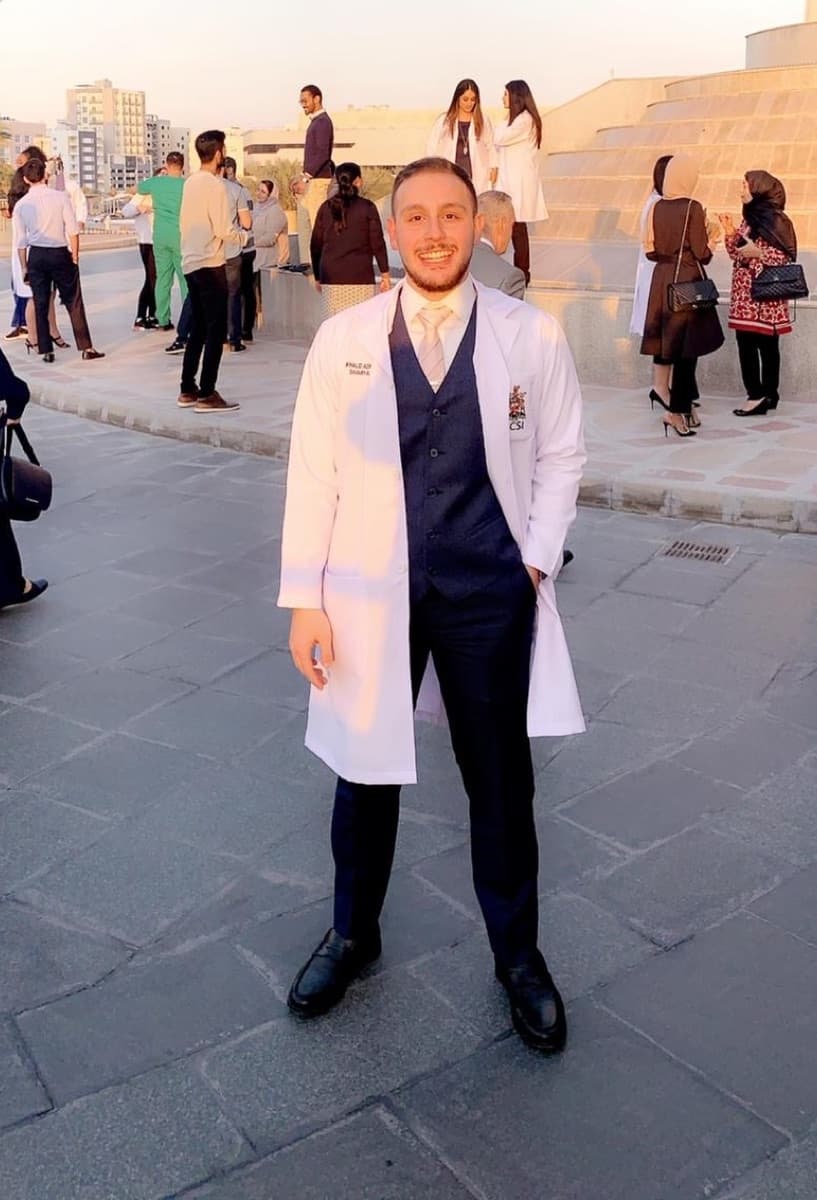
White coat ceremony, RCSI Bahrain- Traded pipettes and beakers for a white coat.
Medical school was a reset. Again.
The hardest part? Being back in a classroom. After years of independent research, I was memorizing anatomy, practicing clinical examinations, sitting through lectures. From confident researcher to struggling medical student. Humbling.
But the chemistry background paid off, differently than expected. Analytical thinking. Systematic approach to complex problems. Comfort with uncertainty. It all translated to clinical medicine.
Five years in Bahrain meant international perspective: diverse healthcare systems, varied patient populations, classmates from everywhere. I stayed academically active, publishing multiple papers alongside clinical training.
Every rotation taught me something new about what kind of doctor I wanted to become. By graduation, the path forward was becoming clearer.
Graduated with distinction. Residency was next.
White coat ceremony, RCSI Bahrain- Traded pipettes and beakers for a white coat.
CHAPTER 03 · 2022–2024
Training
Two countries’ applications at once, Foundation years in Oxford, and a fellowship at the Kennedy Institute.
2022
Residency Applications
US & UK
The transition from medical school to residency? Brutal.
I went all in on both pathways. For the US: completed USMLE Steps 1 and 2, traveled to the States for electives in Chicago and Boston, interviewed for surgery and O&G programs across the country. Simultaneously preparing UK applications: Foundation Programme, SJT exam, the whole process.
Running parallel applications meant double the stress, double the preparation, double the uncertainty. Two completely different systems. Two sets of interviews. Two possible futures.
Match Day came. The US didn't work out. Disappointing? Absolutely. But the UK result softened the blow immediately: I'd matched to Oxford, my top choice.
Plot twist part two: the "backup" plan was actually the better path. Oxford Foundation Training. The doors this would open? I had no idea yet.
2022-2024
Foundation Years
Oxford & Beyond
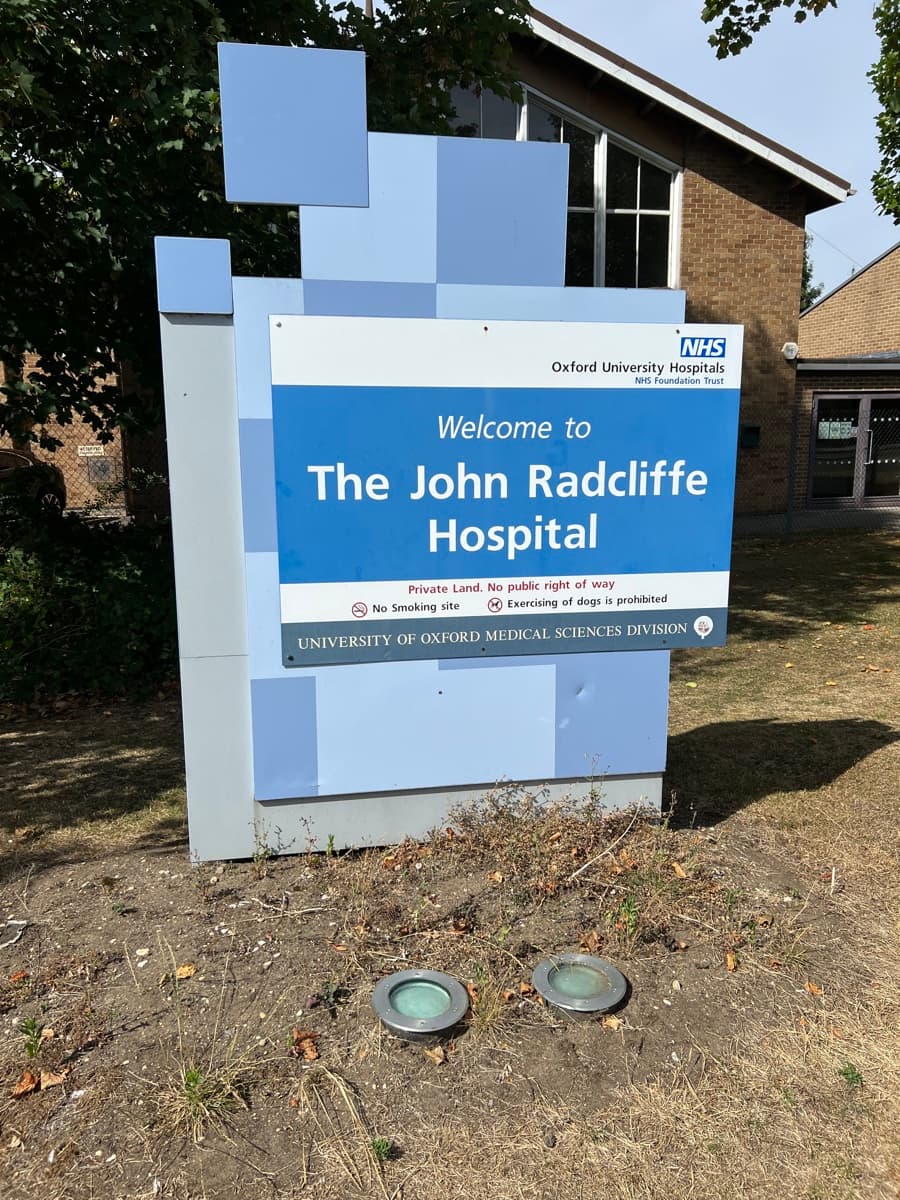
Foundation training, Oxford- JR Oxford: Matched to my top choice, ready to begin.
Student to doctor. The transition was brutal.
Real decisions, real patients, real responsibility. The learning curve was vertical. Every shift brought new challenges and emergencies.
Oxford Foundation Training was demanding. World-class environment, brilliant consultants. I rotated through specialties, building clinical skills while searching for the right path.
Surgery kept pulling me back. During my surgical rotation, I stayed academically hungry. The right people noticed and nominated me for a research fellowship at Oxford investigating Crohn's disease.
The opportunity was perfect: clinical medicine plus rigorous research. I'd missed the lab. This was the bridge I needed. I said yes.
Foundation training, Oxford- JR Oxford: Matched to my top choice, ready to begin.
2023-2024
Research Fellowship
Kennedy Institute, Oxford
The enteric nervous system in Crohn's disease: what the £130k went on.
I joined Dr. Matthias Friedrich's lab at the Kennedy Institute. First task? Secure funding.
We wrote grants. Refined our pitch. Made the scientific case. £130k from the Oxford Colon Cancer Trust. Approved. Now we could actually do the work.
I was back in the lab, but different this time. Clinical perspective changed everything. I focused on the enteric nervous system, using CellDive, transcriptomics, advanced techniques to probe the gut-brain axis in Crohn's disease.
Results came. Publications in top-tier journals. Conference presentations. Awards, including the Royal College of Physicians Novel Research of the Year (2024). Real contributions to the field while maintaining clinical momentum.
This was the bridge I'd been building since chemistry: rigorous science meets direct impact. Lab informed by bedside. Research shaped by patient care. Everything finally connected.
The enteric nervous system in Crohn's disease: what the £130k went on.
2024
Specialty Applications
The Final Decision
The hardest decision of my training.
I applied to both Core Surgical Training and O&G. Prepared for both: separate exams, separate interviews, building two different cases simultaneously.
Both came through: Core Surgical Training at Cambridge. O&G at Oxford. Two prestigious programs. Decision time.
O&G offered something surgery alone couldn't: diversity. Surgery, medicine, continuity of care. Acute emergencies and long-term relationships. Operating theatres and antenatal clinics. Run-through training, one application, straight path to consultant.
Cambridge surgery was tempting. Oxford O&G was right. I chose O&G.
CHAPTER 04 · 2024–Now
Oxford
Specialty training in O&G, and mentoring the people coming up the same path behind me.
2025-Present
O&G Specialty Training
Oxford
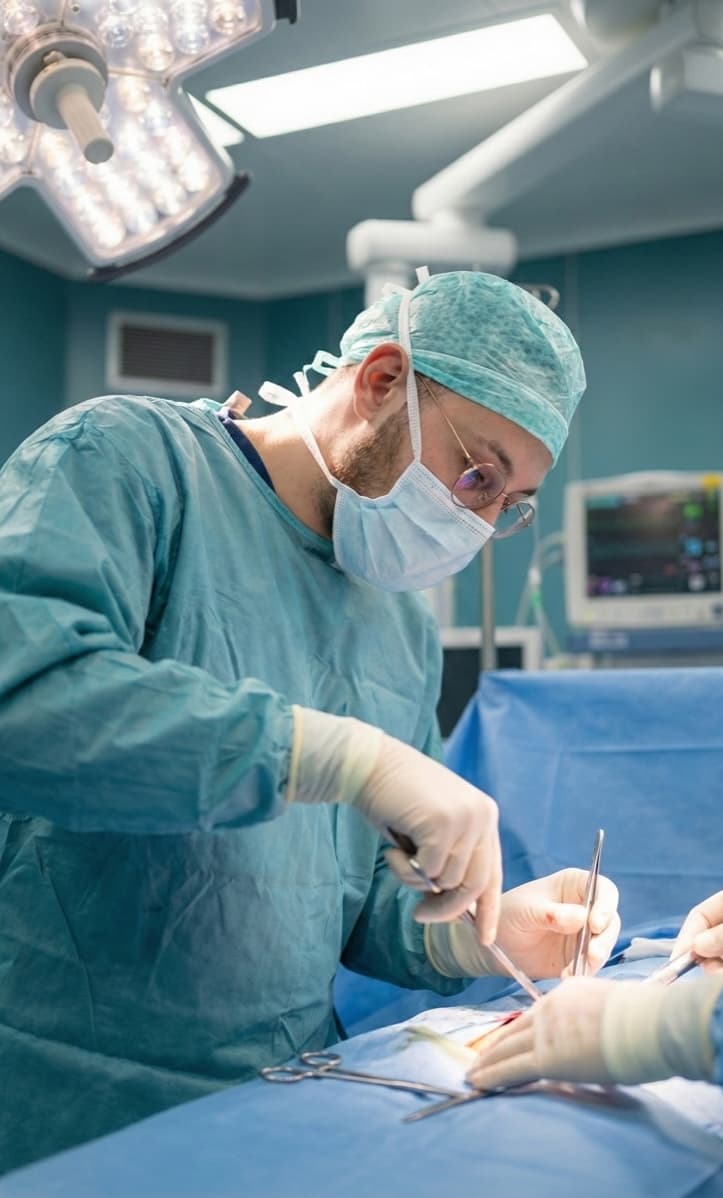
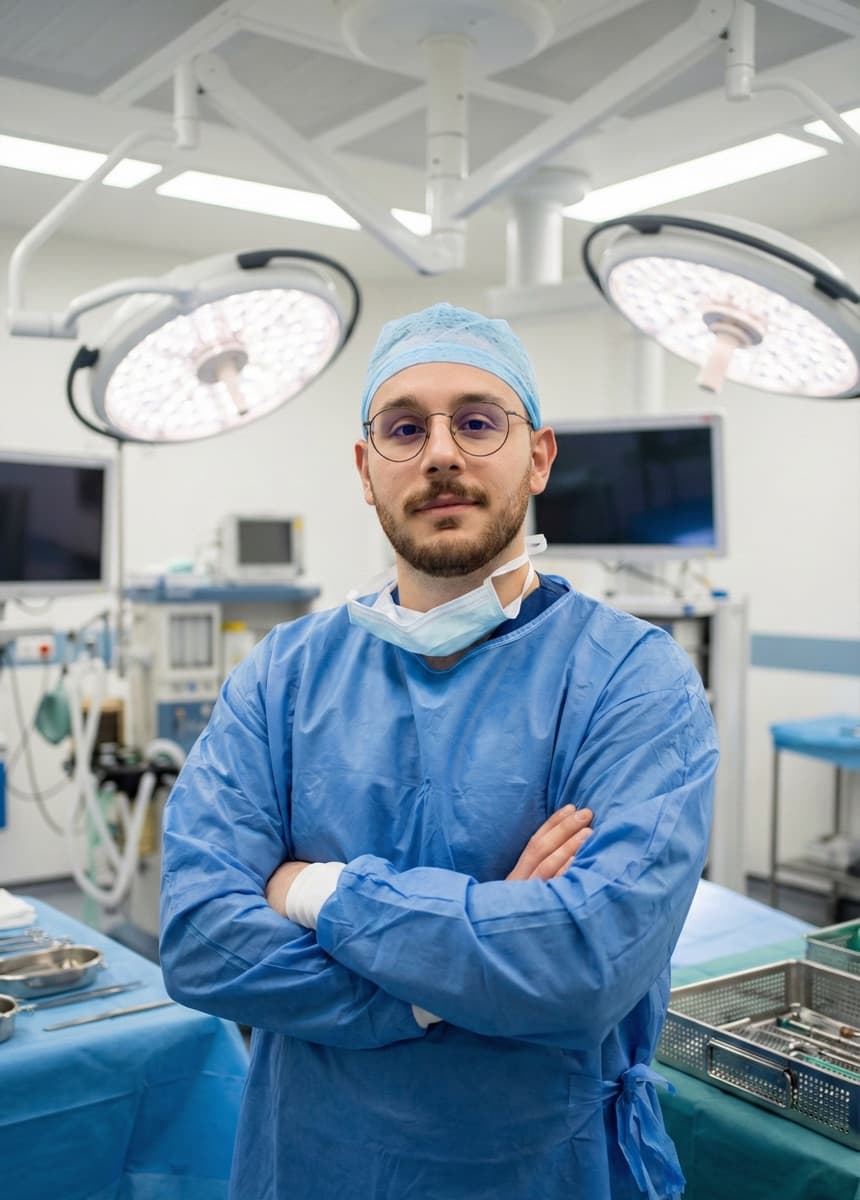
Oxford- Where it all led: O&G operating theatre.
I'm navigating specialty training: rotations across hospitals, building surgical skills, managing complex cases, learning from excellent consultants. The learning curve is steep, but this time it's exactly where I want to be. Every day confirms it.
Operating theatre in the morning, antenatal clinic in the afternoon. Emergency caesareans at 2am, routine procedures the next day. Medicine meets surgery. Acute meets continuity.
The path from chemistry labs in Toronto to operating theatres in Oxford wasn't straightforward. Multiple pivots. Several reinventions. But every detour built something essential.
Now I'm here. Training in the specialty I chose. At the institution I wanted. Doing exactly what I set out to do.
Oxford- Where it all led: O&G operating theatre.
2024-Present
Why I Mentor
Passing It On
Recent enough to remember, experienced enough to help.
The path to medicine is anything but straightforward. Mine included chemistry to medicine, a declined PhD, international training, dual US-UK applications, research at Oxford, and choosing O&G over Cambridge surgery.
I mentor because I remember needing guidance from someone who'd just navigated the same system. Not advice from a decade ago, but current experience from someone one step ahead.
Your journey will be different. But having someone one step ahead makes the decisions clearer.
Recent enough to remember, experienced enough to help.
CHAPTER 05 · Now
Building
The software I write between shifts, for the problems I keep running into on them.
Present
Now: I Build
Doctor Who Ships Software
Somewhere between night shifts and clinics, I wrote my first line of code. The problems were everywhere: guidelines buried in PDFs, training data split across government websites, teaching that evaporated the moment a session ended, an ePortfolio that tells you nothing.
I stopped complaining about them and started building. Eight months after that first line of code, I shipped a full product. Then another. Then a pipeline, a labour-ward board, a literature digest that reads PubMed so I don't have to.
I'm a self-taught developer who happens to be a doctor. I build for the person standing in the corridor at 3am, because most weeks that's me. Clinical tools, training apps, automations. Some live, some still in progress, all real.
This is the chapter the rest of the site is really about. If you want to see what I've made, the Built page is the honest version.